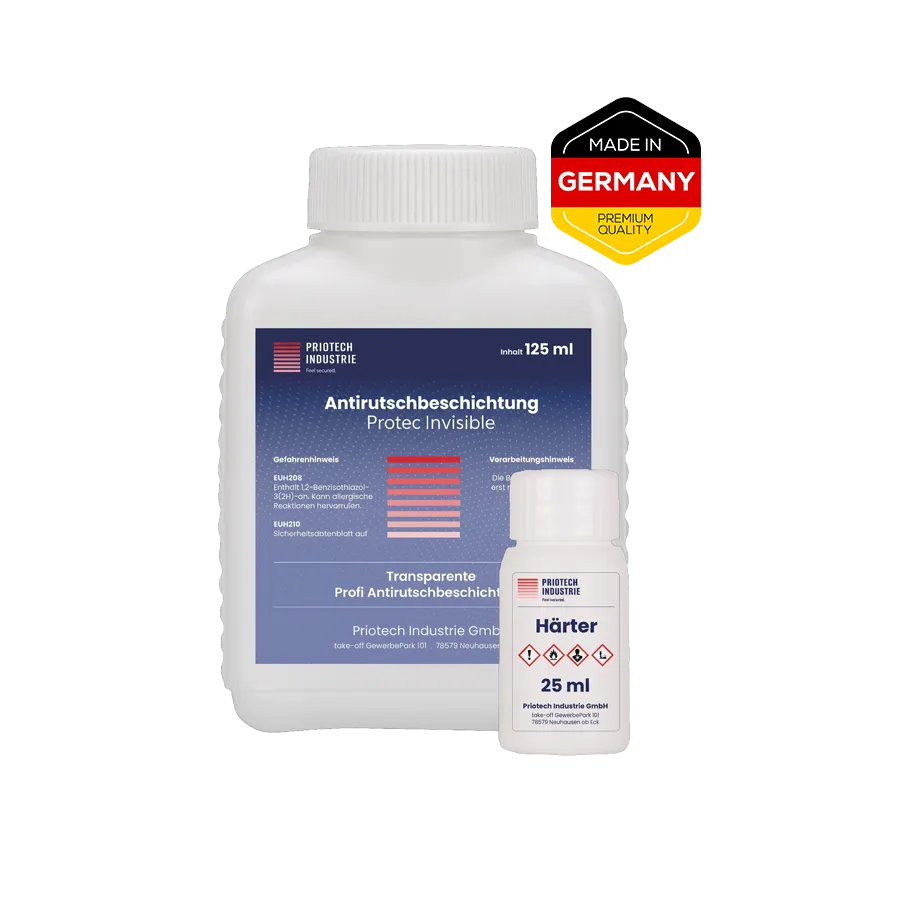
Anti-slip acrylic from Priotech Industrie - the best solution against slipping

There are a variety of ways to make acrylic surfaces and floors slip-resistant. These include anti-slip mats, anti-slip strips, or anti-slip pads (e.g., bathtub stickers). And there is Protec Invisible - anti-slip acrylic: If you are looking for a durable, extremely safe, and at the same time aesthetic solution, a high-quality anti-slip coating is likely the right choice for you.

How can acrylic bathtubs, shower trays, and floors be made slip-resistant?

To secure acrylic bathtubs, shower trays, and floors against slipping, there are several effective methods.

Anti-slip coating: A special anti-slip acrylic coating can be applied to the surface. These coatings are available in various degrees of slip resistance and offer a permanent solution.

Anti-slip mats: There are special, waterproof anti-slip mats designed for use in bathtubs and showers. These mats adhere well to the surface and provide additional grip.

Anti-slip strips: These self-adhesive strips can be applied to the bottom of bathtubs or showers. They are available in various sizes and designs and offer a simple and cost-effective solution.

Anti-slip pads and anti-slip stickers: The advantages and disadvantages are largely the same as those of anti-slip mats and anti-slip strips.

Regular cleaning: Regular cleaning of the surfaces helps to remove soap residue and other deposits that can increase the risk of slipping.

Grab bars or handles: These can be installed on walls or near bathtubs and showers to provide additional support when getting in and out.

By combining these methods, safety in bathtubs, shower trays, and on acrylic floors can be significantly improved.

Is an anti-slip coating for acrylic surfaces hygienic?

Yes, an anti-slip coating for acrylic surfaces can be hygienic, provided it is properly selected and applied. Here are some aspects concerning the hygiene of anti-slip coatings.

Surface structure: Many anti-slip coatings are formulated to provide a smooth, easy-to-clean surface. This facilitates the removal of dirt, soap residue, and bacteria.

Antibacterial properties: Some modern anti-slip coatings contain antibacterial additives that inhibit the growth of microorganisms and thus improve hygiene.

Water resistance: High-quality coatings are water-repellent and prevent moisture from penetrating the surface, which reduces the risk of mold and bacterial growth.

Easy cleaning: Anti-slip coatings should be designed so that they can be easily cleaned with conventional cleaning agents. Regular cleaning is important to maintain hygienic conditions.

Durability: A durable coating remains in good condition for longer and prevents dirt and microbes from penetrating into cracks or signs of wear.

Important notes When purchasing an anti-slip coating, ensure that it is suitable for use in damp environments and possesses hygienic properties. Regular cleaning and maintenance are crucial to ensure hygiene, regardless of the type of coating. Overall, a high-quality anti-slip coating for acrylic surfaces can be hygienic as long as it is properly selected and maintained.

How can you identify a good anti-slip coating?

A good anti-slip coating can be identified by several features. Here are some important points you should look out for.

Slip resistance rating Pay attention to the slip resistance rating (e.g., R9 to R13 according to DIN 51130). The higher the value, the more slip-resistant the coating is.

Material quality High-quality anti-slip coatings consist of robust, long-lasting materials that are resistant to wear and chemical influences.

Ease of application A good coating should be easy to apply, either by yourself or by professionals. Check whether clear application instructions are provided.

Drying time Find out about the coating's drying time. A short drying time can make it easier to use.

Water and dirt repellent A good anti-slip coating should also be water and dirt repellent to promote hygiene and longevity.

UV resistance If the tiles are in an area with sunlight, the coating should be UV-resistant to prevent fading or embrittlement.

Durability Find out about the service life of the coating and whether it needs to be renewed regularly.

Certifications and tests Look for products that have been tested and certified by independent institutes. This gives you additional assurance regarding quality.

What makes the "Protec Invisible" anti-slip coating particularly suitable for use on acrylic?

The Protec Invisible anti-slip coating offers several properties that make it particularly suitable for use on acrylic surfaces.

Special formulation: Protec Invisible has been specifically developed for use on sensitive surfaces such as acrylic. The formulation ensures that the coating adheres well without damaging the material.

Seamless application: The coating can be applied evenly, creating a seamless and continuous non-slip surface. This minimizes the risk of tripping hazards that can occur with other solutions.

Transparent appearance: The name "Invisible" indicates that the coating is transparent and therefore does not affect the aesthetic appearance of the acrylic. This is particularly important for applications in bathrooms, where design often plays a role.

Hygienic properties: Protec Invisible is formulated to provide a slightly rough, easy-to-clean surface. This contributes to hygiene, as dirt and deposits are less likely to adhere.

Water resistance:The coating is water-repellent, making it ideal for damp environments such as bathrooms and showers. This protects the surface from damage and reduces the risk of mold growth.

Durability: Protec Invisible is resistant to abrasion and chemicals, which means that the slip resistance is maintained over a longer period.

Easy application: The coating can generally be applied easily, either by spraying or rolling, and does not require special tools or professional help.

Overall, these properties make the Protec Invisible anti-slip coating an excellent choice for use on acrylic surfaces in bathrooms and showers.

Use Cases

Our anti-slip coatings are ideally suited for use on acrylic surfaces.

  • Frau im Bad neben Badewanne

    Bathtub, shower

    Bathtubs and shower trays for reliable anti-slip protection

  • Pool aus Acryl

    Pools, stairs

    Pools, pool floors, pool stairs, acrylic surrounds

  • Bad mit Dusche

    Floors, stairs

    Acrylic floors and stairs in bathrooms, kitchens, and wet areas

1 of 3

How must acrylic surfaces be prepared for an anti-slip coating?

Preparing acrylic surfaces, such as bathtubs, shower trays, and floors, is crucial for the successful application of an anti-slip coating. Here are the steps you should follow.

Cleaning: Remove all soap residue, dirt, oil, or other deposits from the surface. Use a mild detergent or a special acrylic cleaner for this purpose. Rinse the surface thoroughly with clean water to remove all detergent residue.

Drying: Allow the surface to dry completely. This is important as moisture can impair the adhesion of the coating.

Sanding (optional): If the surface is very smooth, light sanding with fine-grit sandpaper (e.g., 220 grit) can help improve adhesion. Be careful not to scratch the surface too deeply, as this could damage the material. After sanding, thoroughly remove the sanding dust with a damp cloth.

Degreasing: Use a suitable degreaser to ensure that no grease or oil remains on the surface. This is particularly important if the tub or shower has previously been treated with care products.

Testing adhesion: Perform an adhesion test by applying a small amount of the coating to a small area and checking whether it adheres well once dry. If not, further preparation may be necessary.

Temperature and conditions: Ensure that the room temperature and conditions are suitable for applying the coating. High humidity or low temperatures can affect drying time and adhesion.

Following manufacturer's instructions: Read the specific instructions from the anti-slip coating manufacturer carefully and follow all recommended preparation and application steps.

By properly preparing the acrylic surfaces, you can ensure that the anti-slip coating adheres optimally and maintains its slip resistance over a longer period of time

How long does it take for the anti-slip coating on acrylic to dry?

The drying time of an acrylic anti-slip coating can vary depending on the product and environmental conditions. In general, the following guidelines apply.

Touch/dust dry: It usually takes about 30 minutes to 2 hours for the coating to be touch or dust dry. During this phase, you can touch the surface lightly without the coating sticking to your fingers.

Through-drying: Complete through-drying, during which the coating achieves its maximum strength and slip resistance, can take between 24 and 72 hours, depending on the specific product properties, room temperature, and humidity.

Recommended waiting time: We recommend not using the coated surface for at least 24 hours to ensure that the coating is fully cured and achieves its optimal performance.

Important notes Follow manufacturer instructions: It is important to observe the specific drying times and recommendations provided by the manufacturer.

Environmental conditions: High humidity or low temperatures can extend the drying time, while good ventilation and moderate temperatures can accelerate drying.

By adhering to these guidelines and following the manufacturer's instructions, you ensure that the anti-slip coating cures optimally and maintains its functionality.

How long does an anti-slip coating last on acrylic?

The durability of an anti-slip coating on acrylic can depend on various factors, including:

Quality of the coating: High-quality anti-slip coatings can last for several years, while inferior products may wear off faster. It is therefore recommended to spend a few euros more and purchase a high-quality coating such as our Protec Invisible anti-slip coating.

Frequency of use: In high-traffic areas, such as public showers or bathrooms, the coating may wear off faster than in less frequently used rooms.

Cleaning and maintenance: Regular and appropriate cleaning can extend the lifespan of the coating. Aggressive or abrasive cleaning agents can damage the coating and reduce its durability.

Environmental conditions: Factors such as temperature, humidity, and chemical influences (e.g., from cleaning agents or personal care products) can also affect durability.

General durability
On average, an anti-slip coating on acrylic can last between 3 and 5 years if applied and maintained properly. Some high-quality products may even last longer.

How do you clean acrylic surfaces that have an anti-slip coating?

To maximize the lifespan of the anti-slip coating: avoid aggressive cleaning agents and use mild, acrylic-friendly cleaners.

Clean the surface regularly to prevent the buildup of deposits that could impair slip resistance.

Check the coating regularly for signs of wear and renew it if necessary.

By carefully selecting and maintaining the anti-slip coating, you can significantly extend its service life.

Is it possible to touch up an anti-slip coating on acrylic after it has been applied?

Yes, it is possible to touch up an anti-slip coating on acrylic, although the exact process depends on the type of coating and the degree of wear. Here are some steps and considerations you should keep in mind.

Assessment of damage: Check the existing coating for signs of wear, cracks, or peeling. If only small areas are affected, a touch-up may be feasible. In the case of extensive damage, a complete re-sealing might be necessary.

Cleaning: Clean the affected areas thoroughly to remove dirt, soap residue, or other deposits. This is important to ensure good adhesion of the new coating.

Sanding (optional): If necessary, you can lightly sand the damaged spots to improve the adhesion of the new coating. Be careful not to damage the surface too much.

Applying the new coating: Apply the anti-slip coating to the touched-up areas according to the manufacturer's instructions. Make sure to use the correct amount and apply it evenly.

Observe drying time: Allow the repaired surface to dry according to the manufacturer's instructions. Be sure not to step on the area during the drying time.

Regular maintenance: To minimize future wear, it is important to clean the coated surface regularly and perform maintenance if necessary.

Notes
In case of uncertainty or extensive damage, it may be advisable to consult a professional to ensure that the repair is carried out properly. Some anti-slip coatings may not be designed to be recoated. In such cases, a complete re-sealing would be the best option. Through careful repair, the functionality of the anti-slip coating on acrylic can be maintained and safety in bathtubs or shower trays can be improved.

Frau im Callcenter

Talk to us

We are here for your request. Do you have any questions or would you like a quote for a larger order quantity?

How can we help you?

What would you like to tell us?

We will be in touch with you as soon as possible.