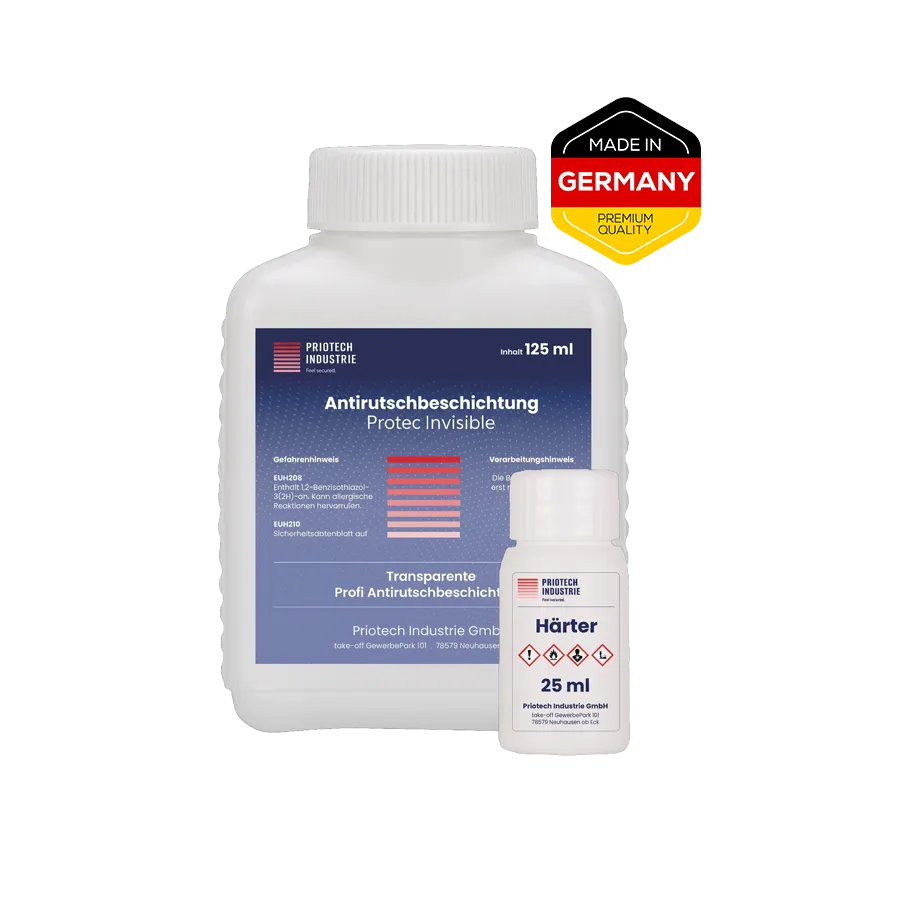
Preparing acrylic surfaces, such as bathtubs, shower trays, and floors, is crucial for the successful application of an anti-slip coating. Here are the steps you should follow.
Cleaning: Remove all soap residue, dirt, oil, or other deposits from the surface. Use a mild detergent or a special acrylic cleaner for this purpose. Rinse the surface thoroughly with clean water to remove any detergent residue.
Drying: Allow the surface to dry completely. This is important, as moisture can impair the adhesion of the coating.
Sanding (optional): If the surface is very smooth, light sanding with fine-grit sandpaper (e.g., 220 grit) can help improve adhesion. Be careful not to scratch the surface too deeply, as this could damage the material. After sanding, remove the sanding dust thoroughly with a damp cloth.
Degreasing: Use a suitable degreaser to ensure that no grease or oils remain on the surface. This is especially important if the tub or shower has previously been treated with care products.
Testing Adhesion: Perform an adhesion test by applying a small area of the coating and checking whether it adheres well after drying. If not, further preparation may be required.
Temperature and Conditions: Ensure that the room temperature and conditions are suitable for applying the coating. High humidity or low temperatures can affect drying time and adhesion.
Follow Manufacturer Instructions: Read the specific instructions provided by the manufacturer of the anti-slip coating carefully and follow all recommended preparation and application steps.
By properly preparing the acrylic surfaces, you can ensure that the anti-slip coating adheres optimally and retains its slip resistance over a longer period.
If you have any questions, please feel free to contact our technical advisors or send us a message.