Anti-slip - what exactly is that?

Anti-slip refers to properties or measures that prevent something from slipping or sliding. In many contexts, such as flooring, footwear, or mats, anti-slip means the surface is designed to provide better traction and prevent slipping. This is especially important in areas where wetness, oil, or other slippery substances are present. Anti-slip products contribute to safety and reduce the risk of falls and injuries.

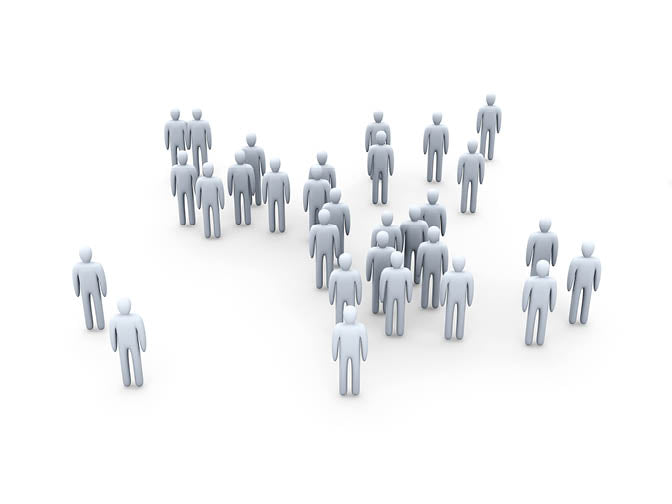
Grafik Menschenmenge

646,000 fatal accidents annually worldwide

According to the WHO, falls are one of the most common causes of injury worldwide. Each year, there are an estimated 646,000 fatal falls, which are often caused by slipping.

That is roughly equivalent to the population of Stuttgart!

An overview of anti-slip technologies and products

There is a wide variety of anti-slip products and technologies. Depending on their properties, these different products are used in very different areas of application. Relatively strict rules apply to the properties and anti-slip capabilities of products in industrial and commercial settings. Depending on what needs to be secured, the required level of slip resistance, the load on the surfaces, and the aesthetic requirements, one should choose an anti-slip solution carefully.

This is because every solution has both advantages and disadvantages. Furthermore, there are sometimes significant quality differences even within product categories. On the following pages, we will show you which products are available, which products are suitable for which applications, and how to find the right anti-slip solution for your needs.

  • Anti-slip mats: These mats are used in bathrooms, kitchens, or hallways to prevent slipping on smooth surfaces.
  • Anti-slip tiles: Specially treated tiles with a rough surface to minimize the risk of slipping, especially in wet areas.
  • Anti-slip coatings: Liquid or paste-like products that are applied to existing surfaces to increase slip resistance.
  • Anti-slip soles: Shoes with special soles made of non-slip material that provide better grip on various surfaces.
  • Anti-slip tape: Adhesive tapes that are applied to stairs, ramps, or other areas to reduce the risk of slipping.
  • Anti-slip linings: Materials used on vehicle loading areas or in industrial environments to prevent goods from sliding.
  • Anti-slip gloves: Gloves with special coatings that offer a better grip, especially when handling smooth or slippery objects.
  • Rug pads: These are used under rugs to prevent them from sliding on smooth floors.
  • Sports equipment with anti-slip surfaces: Equipment such as yoga mats or fitness devices that use non-slip materials to increase safety during exercise.

A comparison of some anti-slip products

Attached is a brief overview of the advantages and disadvantages of the most frequently used anti-slip products.

  • Antirutsch Matte

    Anti-slip mats

    Advantages

    • Improved safety
    • Improved adhesion
    • Diverse areas of application
    • Easy cleaning

    Disadvantages

    • Wear and tear
    • Low durability
    • Potential for slipping
    • Low chemical and mechanical resistance
    • Maintenance
    • Aesthetics
  • Antirutsch Steifen

    Anti-slip strips

    Advantages

    • Increased safety
    • Easy installation
    • Diverse applications
    • Cost-efficiency

    Disadvantages

    • Wear and tear
    • Cleaning
    • Low chemical and mechanical resistance
    • Can slip
    • Durability
1 of 2
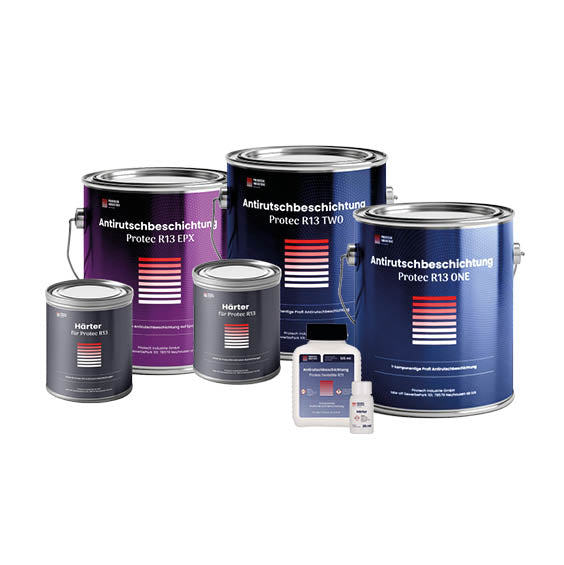
Antirutschbeschichtungen von Priotech Industrie

Anti-slip coatings

Anti-slip coatings also have advantages and disadvantages. We would like to briefly outline these.

Advantages

  • Maximum safety
  • Chemical resistance
  • Mechanical resistance
  • Durability
  • Versatile application

Disadvantages

  • Costs
  • Aesthetics
  • More complex processing

Anti-slip coatings: When mechanical resistance is what counts.

Anti-slip coatings are generally more mechanically resistant than anti-slip mats or anti-slip tapes for several reasons:

  1. Direct bond with the surface: Anti-slip coatings are applied directly to the underlying surface, forming a solid bond. This makes them less susceptible to peeling or shifting, which can occur with mats and tapes.
  2. Thin, robust layer: Most anti-slip coatings are designed to be thin yet robust. This construction allows them to withstand mechanical stress without breaking or deforming.
  3. Material-specific properties: Anti-slip coatings are often made from durable materials such as epoxy resins or polyurethane, which exhibit high abrasion and impact resistance. These materials are designed to withstand mechanical impact.
  4. Resistance to deformation: Anti-slip coatings do not deform easily under pressure or mechanical stress. In contrast, mats and tapes can be compromised by dents or tears during intensive use.
  5. Unified surface: Anti-slip coatings provide a smooth and homogeneous surface that allows for an even distribution of loads. Mats and tapes can wear down at the edges or transitions, which can lead to weak points.
  6. Aging resistance: Many anti-slip coatings are formulated to be UV-resistant and aging-resistant. This increases their service life and mechanical stability compared to mats and tapes, which can wear out over time due to sunlight and environmental factors.

Where is mechanical resistance required?

  • Antirutsch Maschinenbau

    Production

    In production and manufacturing plants, for example in mechanical engineering, high mechanical resistance is of great importance.

  • Antirutsch Lager Gabelstaplerfest

    Warehousing, logistics

    Heavy machinery and vehicles such as forklifts are used in logistics and warehousing. Here, anti-slip coatings must perform at their peak.

  • Antirutsch Gebäude

    Stairs, buildings

    The areas of application in and around buildings are diverse. Stairs, ramps, paths, terraces, balconies, garages, and underground parking garages are just a few examples of where they can be used.

  • Antirutsch Fahrzeugbau

    Vehicle manufacturing

    Specialized vehicles in particular, such as those used by the fire department or the THW, must withstand significant mechanical loads. In this case, mechanical resistance is very important.

  • Antirutsch Bahn und Verkehr

    Transportation

    Passenger transport is particularly concerned with preventing accidents caused by falls. This includes buses, trains, passenger transport, and transport for people with disabilities. However, paths, parking garages, crossings, stairs, etc., must also be protected.

  • Antirutsch Bauindustrie

    Construction industry

    Applications in the construction industry are diverse. The coatings are intended to protect the construction workers themselves on one hand, while on the other, they ensure that buildings can be entered and used without safety risks.

  • Antirutsch Einzelhandel

    Retail

    There is heavy foot traffic in retail stores. These surfaces are walked on by customers and must withstand scooters, strollers, and wheelchairs.

1 of 7

Material Composition

Anti-slip coatings often consist of special chemical compounds that have been developed for their resistance to chemicals. These coatings can contain, for example, epoxy resins or polyurethane, which offer high resistance to many chemical substances.

Surface sealant

Anti-slip coatings are often sealed, which means they provide a protective layer against chemical influences. This sealing prevents aggressive chemicals from penetrating and damaging the material.

Integration into the interface

Anti-slip coatings are applied directly to the substrate, allowing them to bond with the surface and making them less susceptible to wear or detachment. In contrast, mats and tapes can loosen or wear down, which can compromise chemical resistance.

Thickness and stability

Anti-slip coatings are generally thinner, but more stable and less susceptible to damage from chemical substances. Mats and tapes can be worn down or degraded more quickly by chemical influences, such as solvents or cleaning agents.

Adaptability

Anti-slip coatings can be specially formulated to withstand specific chemical conditions, making them ideal for industrial applications where aggressive chemicals may be present. Mats and tapes are often intended for general use and are not designed for specific chemical resistance.

Chemical resistance

  • Beständigkeit gegen Reinigungsmittel

    Detergents

    Our anti-slip coatings are highly resistant to cleaning agents. This makes the coatings ideal for floors and surfaces that need to be cleaned frequently with detergents.

  • Beständigkeit gegen Öle und Fette

    Oils, fuels

    The products offer high resistance to oils, greases, fuels, and lubricants. Important for maintenance facilities, workshops, and kitchens, among others.

  • Beständigkeit gegen Chemikalien

    Chemicals

    Anti-slip coatings are primarily used in industrial environments where there is a risk of contamination by chemicals.

  • Beständigkeit gegen Säuren und Laugen

    Acids and bases

    Resistance to acids and alkalis is important in outdoor environments. This also applies to laundries, tanneries, and industrial facilities, especially in the chemical and petroleum industries.

  • Beständigkeit gegen Salzwasser

    Saltwater

    High resistance to salt water is important in the offshore sector (production platforms, wind turbines), as well as in shipbuilding, shipyards, and ports.

1 of 5

The different anti-slip coatings

There are various types of anti-slip coatings, which are used depending on the application and specific requirements. Here are some common types:

  1. Epoxy resin coatings: These consist of epoxy resin and hardener and offer high mechanical strength as well as chemical resistance. They are ideal for industrial applications and high-traffic areas.
  2. Polyurethane coatings: These are flexible and abrasion-resistant, making them suitable for various surfaces. They offer good resistance to chemical influences and UV radiation.
  3. Acrylic coatings: These water-based coatings are easy to apply and offer moderate slip resistance. They are often suitable for indoor applications and can be available in various colors.
  4. Anti-slip additives: These can be mixed into existing coatings or paints to increase slip resistance without compromising the properties of the base coating.
  5. Rubber or elastomer coatings: These offer a soft, grippy surface and are ideal for applications where comfort and safety are important, e.g., in gyms or on playgrounds.
  6. Special coatings for outdoor applications: These are UV-resistant and weatherproof, making them ideal for use on patios, walkways, or other outdoor surfaces.
  7. Micro- or nanostructured coatings: These use special technologies to create a non-slip surface at a microscopic level. They are often very effective without compromising the aesthetics of the surface.

Benefits

  1. High strength and durability: Epoxy resin coatings are extremely robust and offer high mechanical strength, making them ideal for high-traffic areas.
  2. Chemical resistance: These coatings are highly resistant to many chemicals, including acids, alkalis, and solvents, which makes them predestined for industrial applications.
  3. Water resistance: Epoxy resin is water-repellent, which reduces the risk of moisture damage and inhibits the growth of mold and bacteria.
  4. Easy cleaning: The smooth surface of the epoxy coating makes cleaning and maintenance easier, which is advantageous in hygienic environments.
  5. Versatility: Epoxy resin coatings can be applied to various surfaces, such as concrete, wood, and metal, and are available in different colors and textures.
  6. UV resistance: Many epoxy coatings offer a certain level of resistance to UV radiation, which reduces discoloration and aging caused by sunlight.

Disadvantages

  1. Complex application: The application of epoxy resin coatings often requires specialized knowledge and techniques, and surface preparation is crucial for adhesion.
  2. Long curing time: Epoxy resin requires a certain amount of time to cure before the surface can be used again, which can be impractical in certain applications.
  3. Sensitivity to temperature: Temperature is critical during application; extreme temperatures can impair curing and reduce the performance of the coating.
  4. Cost: Epoxy resin coatings can be more expensive than other anti-slip solutions, especially if professional installation is required.
  5. Risk of slipping when wet: If the surface is not properly textured, it can become slippery when wet, necessitating careful selection and application.

Benefits

  1. Flexibility: Polyurethane coatings are elastic, meaning they can deform under pressure without breaking. This makes them ideal for applications where movement or vibrations occur.
  2. High Abrasion Resistance: These coatings offer excellent resistance to mechanical wear, making them suitable for high-traffic areas.
  3. Chemical Resistance: Polyurethane is resistant to many chemicals, including oils, greases, and solvents, which predisposes it for industrial environments.
  4. UV Resistance: Unlike some other coatings, many polyurethane variants offer good resistance to UV rays, which reduces discoloration and aging caused by sunlight.
  5. Easy Application: Polyurethane coatings are generally easy to apply, either by spraying or rolling, and are available in various colors.
  6. Good Adhesion: They adhere well to various surfaces, including wood, concrete, and metal.

Disadvantages

  1. Costs: Polyurethane coatings can be more expensive than other anti-slip solutions, especially when high-quality products are used.
  2. Long curing time: Similar to epoxy resin, the curing of polyurethane can take some time before the surface can be used again.
  3. Sensitivity to temperature: The application temperature is crucial, as extreme temperatures can impair adhesion and curing.
  4. Susceptibility to scratches: Although they are abrasion-resistant, polyurethane coatings can be susceptible to scratches and damage from sharp objects.
  5. Risk of slipping when wet: As with other coatings, insufficient surface texture can cause the coating to become slippery when wet.

Benefits

  1. Easy application: Acrylic coatings are easy to apply, either by spraying or rolling. They are often user-friendly and do not require any special expertise.
  2. Quick drying time: These coatings generally dry quickly, allowing the surface to be used again soon after application.
  3. Low cost: Acrylic coatings are often more cost-effective than other anti-slip solutions, making them an attractive option for budget projects.
  4. Diverse color options: Acrylic coatings are available in various colors, making it easy to match the design to the surroundings.
  5. Environmentally friendly: Many acrylic coatings are water-based, making them more environmentally friendly and resulting in lower volatile organic compound (VOC) emissions.

Disadvantages

  1. Lower durability: Compared to epoxy or polyurethane coatings, acrylic coatings are often less durable and can wear out more quickly, especially in high-traffic areas.
  2. Less chemical resistance: Acrylic coatings are generally less resistant to aggressive chemicals and solvents, making them less suitable for industrial applications.
  3. Weather resistance: While some acrylic coatings offer a certain level of UV resistance, they can fade or become damaged more quickly outdoors compared to other coatings specifically designed for exterior use.
  4. Susceptibility to cracking: Under extreme temperatures or mechanical stress, acrylic coatings can be prone to cracking or chipping.
  5. Slipping hazard when wet: As with other anti-slip solutions, an inadequate surface texture can cause the coating to become slippery when wet.
DGUV Regel 108-003

How do you know how well the coating protects against slipping?

In Germany, slip resistance is categorized into classes R9 through R13. We explain what these are and how these slip resistance classes are determined.

You can find the complete DGUV regulation here >>